
Five Ways to Wellbeing
A First Steps NZ Resource by the Mental Health Foundation
The Five Ways to Wellbeing were created as a result of the New Economics Foundation’s (NEF) Foresight Project on Mental Capital and Wellbeing research report.
NEF conducted a review of the most up-to-date evidence and found that building five actions into day to day lives is important for the wellbeing of individuals, families, communities and organisations.
You can introduce any of these actions into your life, any time, and you will begin to feel the benefits. Whakatōkia ngā rautaki māmā nei ki tō ao kia rongo ai koe i ngā painga.

Browse More Popular Resources
View and download our most popular First Steps NZ tools and resources.

Why Business Partners Fight (And What To Do About It)
Most business partnerships don’t end in a shouting match. They end in a long silence. Emails stop being copied. Meetings get shorter and more polite. Decisions that used to take five minutes now take three weeks. By the time anyone says the word “lawyer,” the relationship has usually been over for about a year.
Aotearoa runs on small business, and a lot of those businesses are two people. Two mates, two siblings, someone with the trade and someone with the spreadsheet. And here’s the thing we tend to miss: during the working week, most of us spend more waking hours with our business partner than with the person we go home to. We take on debt with them. We lie awake at 3am about the same payroll.
That’s a relationship, whether anyone named it or not, and it will behave like one.
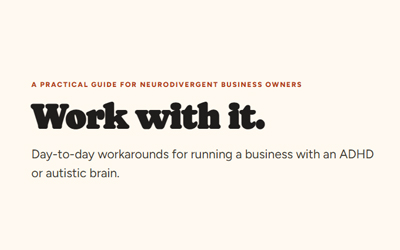
Work with it – Neurodivergent business owners
A practical, colourful tool for neurodivergent business owners — day-to-day workarounds for running a business with an ADHD or autistic brain. It’s organised by the moment things jam up rather than by diagnosis: starting and stopping, remembering and time, admin and people, sensory load and energy. Tick what sounds like you and the relevant workarounds open up, then build a one-page plan you can print or download. Built with adjustable text size and a calm mode for lower visual load.
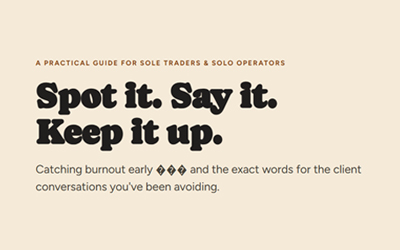
Spot It Say It
An interactive guide for sole traders and solo operators on catching burnout early — and finding the words for the client conversations you’ve been avoiding. Work through a seven-point self-check that shows you where overload is actually sitting, then use nine ready-made scripts for extending a deadline, declining a rush job, pushing back on scope creep, chasing an overdue invoice, raising your rates, or ending a client relationship. Includes what to do if a client pushes back, a two-minute weekly reset, and where to get support in Aotearoa.

Nice Isn’t Free: What It Costs to Be Easy to Work With
Every workplace has one. The person who says yes. Who picks up the job nobody else wants, stays late without being asked, absorbs the difficult client, and never makes a fuss. They’re described in the same words at every performance review: great to work with, real team player, no dramas.
They are also, quite often, the person closest to falling over. And nobody can see it, including them.

How to respond to wellbeing concerns: The Decision Tree
This video series is designed to help leaders and managers feel more confident and prepared when supporting team members who may be struggling with their wellbeing. Each video walks through a key stage of the process—from recognising early signs and preparing for a conversation, through to managing sensitive situations like privacy concerns or suicide risk.

The Hidden ADHD Experience in Women
For many people with ADHD, late diagnosis is the norm rather than the exception[1]. While some are identified in childhood, many, especially women, are left undetected until adulthood, often after years of struggling to meet life’s increasing demands. The reason for this delay appears to lie in gendered expectations.